
Screen Printing vs. DTG vs. DTF: Which Is Best for Custom T-Shirts?
Choosing the right printing technique is an important part of developing custom T-shirts for clothing brands, corporate events, promotional campaigns, and wholesale projects.
Different custom t-shirt printing methods offer different advantages in terms of design flexibility, production quantities, fabric compatibility, print appearance, and cost. Three commonly used techniques are screen printing, Direct-to-Garment (DTG), and Direct-to-Film (DTF) printing.
But which method is best for your project?
In this guide, we compare screen printing, DTG, and DTF printing to help clothing brands, wholesalers, and business buyers make informed decisions when developing custom T-shirts.
1. Overview of the Three Custom T-Shirt Printing Methods
Before choosing a printing technique, it is useful to understand how each method works.
Screen Printing
Screen printing is a traditional printing technique that uses a mesh screen to transfer ink onto fabric. A separate screen is generally prepared for each color in the design.
Ink is pushed through the open areas of the screen onto the garment. The printed ink is then properly cured according to the ink manufacturer’s specifications.
Screen printing is widely used for bulk T-shirt production, corporate uniforms, promotional apparel, and simple graphic designs.

Direct-to-Garment (DTG) Printing
DTG printing applies specialized textile ink directly onto the surface of a garment using an inkjet printing system.
The process is similar in principle to printing a digital image on paper, but it uses inks and garment preparation procedures designed for textiles.
Depending on the garment color, fabric, and ink system, pretreatment may be required before printing. The print must also be properly cured.
DTG is often considered for detailed artwork, multiple colors, and smaller production runs.

Direct-to-Film (DTF) Printing
DTF printing involves printing a design onto a special transfer film using compatible textile inks. Adhesive powder is then applied and processed according to the system requirements.
The prepared transfer is subsequently applied to the garment using a heat press under specified temperature, pressure, and time conditions.
DTF can offer flexibility for different garment colors and fabric types, depending on the transfer materials and application system.
It is commonly considered for colorful designs, logos, lettering, and customized apparel.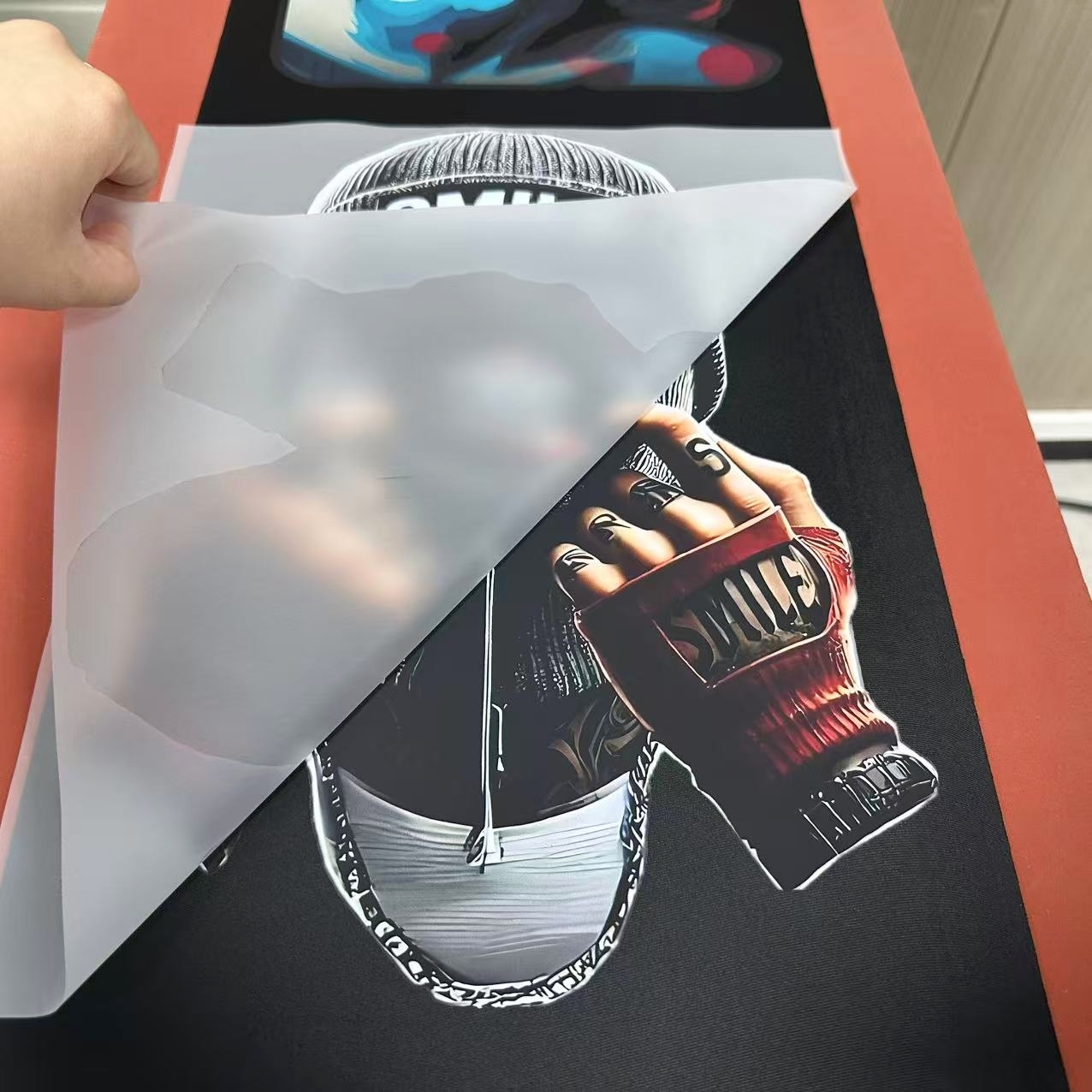
2. Screen Printing vs. DTG vs. DTF: Key Differences
Although all three techniques can be used to customize T-shirts, their production processes and results are different.
Here is a general comparison:
| Comparison | Screen Printing | DTG Printing | DTF Printing |
|---|---|---|---|
| Printing process | Ink through mesh screens | Direct digital printing onto fabric | Printed film transferred onto fabric |
| Design complexity | Best suited to suitable spot-color designs | Good for detailed, multicolor artwork | Good for detailed, multicolor artwork |
| Setup | Screens and preparation required | Digital file and garment preparation | Film and transfer preparation |
| Small orders | Setup may be less economical | Often suitable | Often suitable |
| Bulk production | Often cost-effective for larger runs | Depends on equipment and capacity | Depends on equipment and capacity |
| Fabric suitability | Depends on ink and garment construction | Often favored for suitable cotton garments | Can work with various fabrics when compatible transfers are used |
| Print feel | Depends on ink and print construction | Often relatively integrated with the fabric surface | Transfer layer may be more noticeable |
| Color options | Multiple colors with separate screens | Full-color digital printing | Full-color transfer printing |
There is no universally best printing method. The right choice depends on your artwork, fabric, order quantity, target price, and expected product performance.
3. Screen Printing: Advantages and Limitations
Screen printing remains a popular option for custom T-shirts, particularly when producing larger quantities with consistent designs.
Advantages of Screen Printing
1. Suitable for bulk production
Once the screens are prepared, the printing process can be efficient for larger orders with the same design.
For corporate apparel, promotional T-shirts, and wholesale projects, screen printing may offer an attractive production cost when quantities justify the initial setup.
2. Strong and vibrant color options
Screen printing can produce bold, solid colors with suitable inks and printing techniques.
It is commonly used for company logos, text, team graphics, and simple artwork.
3. Flexible ink choices
Different screen-printing ink systems can create different finishes and effects, subject to fabric compatibility and production requirements.
Examples include standard prints, special finishes, and selected specialty inks.
Limitations of Screen Printing
1. Initial setup is required
Each design color generally requires a separate screen and preparation process. This can increase setup costs and preparation time.
2. Complex artwork may require more preparation
Photographic images, gradients, and designs with many colors can require specialized techniques and additional production steps.
3. Design changes can affect production costs
When artwork changes between orders, screens may need to be prepared again.
When Should You Choose Screen Printing?
Consider screen printing when:
You are ordering larger quantities of the same design.
Your artwork uses solid colors, logos, or relatively simple graphics.
You need consistent printing across a bulk order.
Your project requires a suitable ink finish for the selected fabric.
For corporate teamwear, event merchandise, and wholesale T-shirts, screen printing can be a practical option when the design and quantity are appropriate.
4. DTG Printing: Advantages and Limitations
DTG printing offers a digital approach to garment decoration and is often considered for detailed, colorful artwork.
Advantages of DTG Printing
1. Suitable for detailed designs
DTG can reproduce complex artwork, photographs, gradients, and multiple colors without preparing a separate screen for each color.
2. Flexible for smaller quantities
Because it is a digital printing process, DTG can be useful for projects that do not require large quantities of identical designs.
3. Suitable for selected cotton garments
DTG is commonly used on cotton T-shirts, although the final result depends on the ink system, fabric construction, garment color, and pretreatment.
Limitations of DTG Printing
1. Fabric compatibility matters
The fiber composition and surface characteristics of the garment can affect ink absorption, print appearance, and performance.
Cotton garments are commonly preferred for many DTG systems, while other fabric types require specific equipment and compatible processes.
2. Garment preparation is important
Some DTG processes require pretreatment, particularly for printing on dark-colored garments. This adds preparation steps to production.
3. Production speed and cost vary
DTG is not automatically the most economical option for bulk orders. Printing speed, equipment capacity, garment preparation, and design requirements all affect production efficiency.
When Should You Choose DTG Printing?
Consider DTG when:
Your artwork includes photographs or complex color gradients.
You need detailed digital graphics.
Your order quantity is relatively small.
Your selected garment is compatible with the DTG printing system.
DTG can be a suitable choice for selected private-label T-shirt projects and customized designs.
5. DTF Printing: Advantages and Limitations
DTF printing has become another option for custom garment decoration because the design is printed onto a transfer film before being applied to the garment.
Advantages of DTF Printing
1. Flexible design possibilities
DTF can reproduce detailed artwork, text, logos, and multicolor graphics.
2. Suitable for different garment colors
Compatible transfer systems can be used on both light and dark garments, subject to the transfer material and printing specifications.
3. Potentially broader fabric compatibility
Compared with conventional cotton-focused DTG applications, DTF transfers can be suitable for a wider range of textile materials.
However, compatibility must be confirmed through testing. Not every transfer is suitable for every fabric, especially heat-sensitive materials.
4. Convenient for customized graphics
Designs can be prepared as transfers and applied to garments when needed, depending on the production workflow.
Limitations of DTF Printing
1. A transfer layer remains on the fabric
Unlike some direct-printing processes, DTF creates a printed transfer layer on the garment surface.
The hand feel can be more noticeable, especially with large solid print areas.
2. Application conditions are important
Temperature, pressure, pressing time, transfer materials, and garment characteristics all affect the final result.
3. Durability requires proper testing
Print durability depends on the transfer system, adhesive, application conditions, fabric, and care instructions. Washing and adhesion tests should be considered before bulk production.
When Should You Choose DTF Printing?
Consider DTF when:
Your design contains multiple colors or detailed graphics.
You need customized logos, lettering, or artwork.
Your selected garment is compatible with the transfer material.
You want to evaluate a transfer-based printing solution for different garment styles.
DTF can be a practical option for certain promotional T-shirts, private-label apparel, and customized garment projects.
6. Which Printing Method Is Best for Different T-Shirt Projects?
The best printing technique depends on the purpose of the garment and the requirements of your project.
Corporate T-Shirts and Team-Building Apparel
For corporate events, employee uniforms, and team-building T-shirts, buyers often need consistent logo printing across multiple garments.
Screen printing may be a good choice for larger orders with simple logos and limited colors.
DTF can also be considered for smaller quantities or more detailed artwork.
Promotional T-Shirts and Event Merchandise
Promotional T-shirts often require a balance between appearance, order quantity, and budget.
For large orders with similar designs, screen printing is worth considering.
For smaller orders or complex multicolor graphics, DTG and DTF may offer alternative solutions depending on the fabric and artwork.
Private-Label Clothing Brands
For clothing brands developing their own T-shirt collections, print appearance, fabric compatibility, hand feel, and product positioning are particularly important.
Screen printing can suit bold graphics and suitable bulk production orders.
DTG may work well for detailed artwork on compatible garments.
DTF can offer flexibility for logos and colorful designs, although the transfer feel should be evaluated carefully.
Before choosing a printing technique, brands should request samples and evaluate the final appearance on their intended fabric.
7. How to Choose the Right Custom T-Shirt Printing Method
Before confirming a printing method, consider the following factors.
1. Order Quantity
Order quantity can significantly influence printing costs.
Screen printing involves initial setup, so it may become more economical as the quantity increases.
DTG and DTF may be worth considering for smaller orders, but actual pricing depends on equipment, artwork, labor, materials, and production capacity.
2. Artwork and Design Complexity
Consider the number of colors, graphic details, gradients, and print dimensions.
Simple logos and solid-color graphics: consider screen printing.
Photographic artwork and complex digital graphics: consider DTG.
Detailed multicolor logos and transfer-based graphics: consider DTF.
These are general guidelines rather than strict rules. Actual results depend on the equipment and printing system.
3. Fabric Composition and GSM
Fabric composition and GSM both influence the final printing result.
Cotton, polyester, and blended fabrics can respond differently to different printing systems.
Fabric weight alone does not determine printing compatibility. Knit construction, surface texture, color, and finishing should also be considered.
Before bulk production, test the chosen printing method on the actual fabric.
4. Print Appearance and Hand Feel
The appearance and feel of a printed T-shirt are important to the customer experience.
Consider whether you want:
A bold, solid-color graphic.
A detailed multicolor image.
A relatively soft print feel.
A transfer-based logo or graphic.
Ask for a physical sample whenever print feel and appearance are important to your brand.
5. Budget and Production Requirements
Compare the total production cost rather than looking only at the printing price.
Consider setup costs, printing materials, garment preparation, labor, production quantity, and quality requirements.
The most economical method is the one that meets your design and performance requirements at an acceptable total cost.
8. Why Sampling Is Important Before Bulk T-Shirt Production
Regardless of the printing technique, approving a sample before bulk production is an important step.
A sample helps buyers evaluate:
Print color and overall appearance.
Graphic position and dimensions.
Print hand feel.
Compatibility with the selected fabric.
Adhesion and durability after appropriate washing tests.
Overall garment quality and consistency.
For larger orders, confirm the artwork, fabric specifications, printing process, and approved sample before production begins.
Clear specifications help reduce misunderstandings and support more consistent production results.
9. Custom T-Shirt Printing Solutions at ZhuoYu Apparel
Choosing the right printing method is not simply about selecting a technology. It is about matching the printing process with your fabric, artwork, order quantity, product positioning, and budget.
At ZhuoYu Apparel, we focus on custom apparel manufacturing, including T-shirts and other customized clothing products.
We understand that different projects have different requirements. Corporate teamwear, promotional merchandise, wholesale T-shirts, and private-label collections may all require different fabric and printing solutions.
When developing your custom T-shirt project, it is important to confirm:
Your preferred fabric composition and GSM.
Your artwork and logo requirements.
Your target printing appearance and hand feel.
Your order quantity and target price.
Your packaging and garment labeling requirements.
Looking for a custom T-shirt manufacturing partner?
Contact ZhuoYu Apparel to discuss your T-shirt design, fabric specifications, printing requirements, and production plans.
Share your project details with us and let us help you explore a suitable customization solution.
Frequently Asked Questions
What is the difference between screen printing, DTG, and DTF?
Screen printing uses mesh screens to apply ink to fabric. DTG prints ink directly onto the garment, while DTF prints a design onto a transfer film that is subsequently heat-applied to the fabric.
Which T-shirt printing method is best for bulk orders?
Screen printing is often worth considering for larger orders with the same design because its initial setup costs can be spread across more garments. However, the most suitable option depends on the design, colors, quantity, and production requirements.
Is DTG or DTF better for cotton T-shirts?
Both can be used for suitable cotton T-shirts. DTG prints directly onto the garment, while DTF uses a transfer film. The choice depends on the artwork, desired print feel, equipment, and final product requirements.
Which printing method is best for colorful designs?
DTG and DTF are both commonly considered for complex multicolor designs. Screen printing can also reproduce multicolor artwork, but may require additional screens and preparation.
Which printing method lasts the longest?
There is no universal answer. Durability depends on ink or transfer materials, application and curing conditions, fabric compatibility, garment care, and production quality. Proper sample and wash testing are important.
Can screen printing, DTG, and DTF be used on polyester T-shirts?
Screen printing and DTF can be suitable for selected polyester garments when compatible inks, transfers, and application conditions are used. Standard DTG systems are more commonly associated with cotton garments. Actual compatibility should always be confirmed through testing.
Should I choose the printing method before selecting the fabric?
Ideally, fabric and printing should be considered together during product development. The fabric composition, color, GSM, and surface characteristics can affect printing compatibility and the final appearance.
Ready to develop your custom T-shirts? Contact ZhuoYu Apparel to discuss your fabric, printing, and manufacturing requirements.